
Plantin-Moretus Museum: Antwerp's UNESCO Printing House
The Plantin-Moretus Museum is a sixteenth-century printing house and family home on Vrijdagmarkt in Antwerp, kept much as the Plantin-Moretus family left it, with the historic presses still in place. It is a UNESCO World Heritage Site and one of the few museums where the building, the business and the family story are the exhibits rather than the backdrop to them. This guide covers where it sits in the old centre, what to look at on each floor, how long to give it and what to pair with it nearby.
A family home and a working print shop
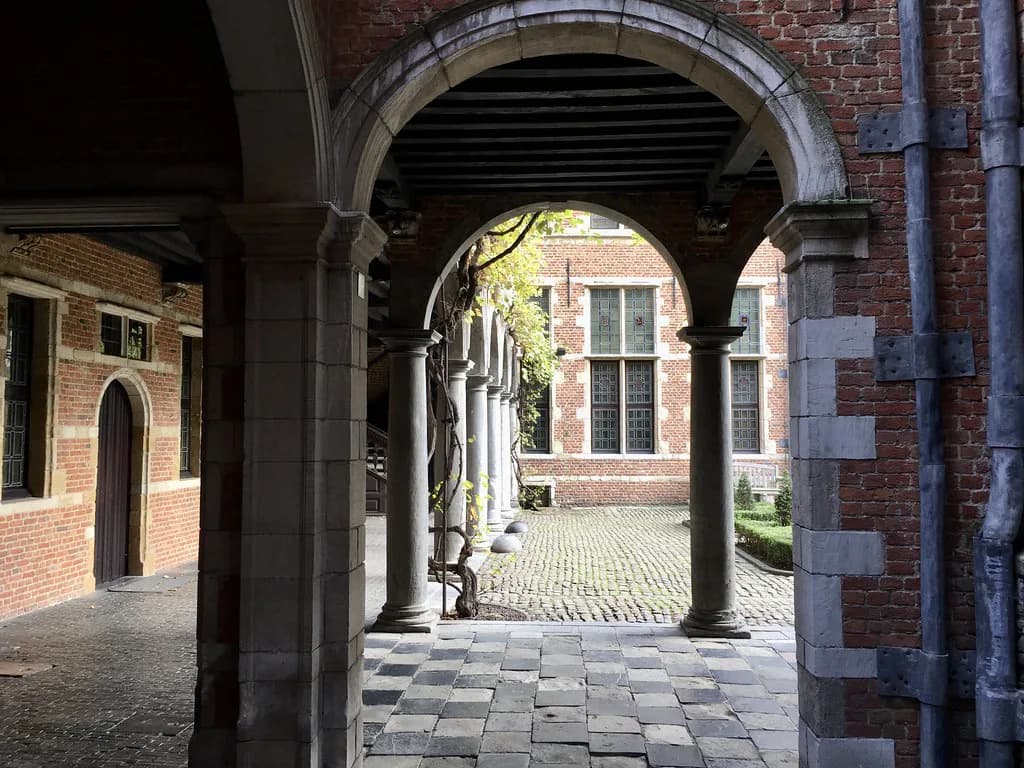
Christophe Plantin came from Saint-Avertin near Tours and settled in Antwerp around 1550, building the Officina Plantiniana into a publishing business with branches in Leiden and Paris. His multilingual Biblia regia persuaded Philip II of Spain of the quality of his work and won him the exclusive right to export liturgical books to Central and South America. The house on Vrijdagmarkt stayed with his descendants, the Moretus family, for nine generations, which is why the interiors, floors and fittings survive rather than being reconstructed.
The museum presents the house as a home first: creaking floors, original living rooms and the workshop where the presses sat. If you arrive expecting a gallery of framed prints, recalibrate; the interest lies in the wooden presses, the type cases and the sense of a business that was interrupted rather than closed.
Where the museum is on Vrijdagmarkt
The address is Vrijdagmarkt 22, in Antwerp's old centre south of the Grote Markt. From the cathedral square it is a straightforward walk of roughly ten minutes through the streets towards the river, and the museum's frontage onto the square is the landmark to aim for.
Because it sits on a working square rather than a museum boulevard, it slots neatly into a walking day: belfry and cathedral first, then Vrijdagmarkt, then the river quays. The museum has improved lighting and signage facing the square, so the entrance is easier to spot than its discreet facade suggests.
What to see on the ground floor
Downstairs the displays introduce Plantin as a family man, a manager and a businessman as well as a printer, which sets up the rest of the visit. The presses themselves are the centrepiece: heavy wooden machines that made the Plantin house one of the most productive print shops in sixteenth-century Europe.
Plantin was also a design trendsetter. He introduced elegant French typefaces, including Garamond, to the Southern Netherlands and built a market for books with refined engraved copperplate illustrations. Look for the type and the plates as you move between rooms; they explain why the shop's output looked different from its rivals'.
Upstairs: language, science, religion and society
The upper floor turns to the publishing output, arranged around four themes: language, science, religion, and people and society. Ten major exhibits are singled out as the house's real bestsellers, among them Ortelius's maps and Stevin's mathematical works, so you can linger on named objects rather than reading every label.
Plantin's grandson Balthasar Moretus worked with his childhood friend Peter Paul Rubens on the layout of the Baroque book, which is the thread linking the press to Antwerp's painters. If you are heading to the KMSKA afterwards, this floor gives useful context on how the city's printers and artists moved in the same circles.
Hands-on elements and the role of digital media
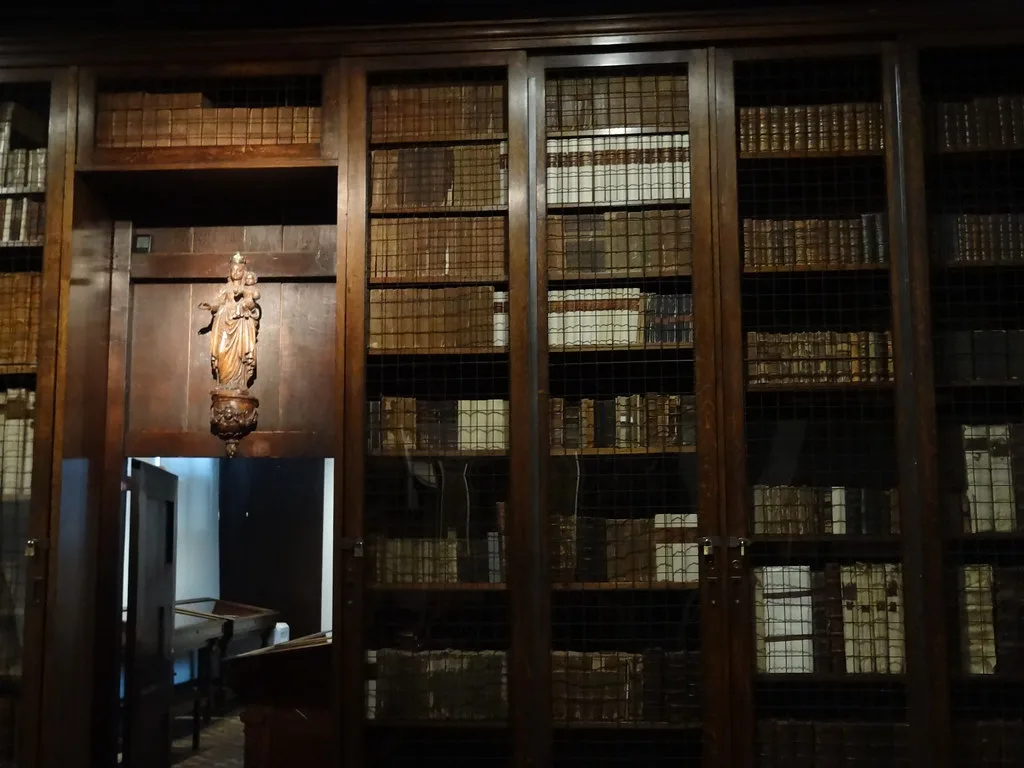
The renovation brought cinematic interventions, soundscapes and hands-on activities into the house, including the chance to handle books and listen to stories about the family. Digital media is present but deliberately kept subordinate: the book remains the centre of the presentation, and the rituals of handling one are built into the route.
That balance suits anyone travelling with a sceptical companion who expects an old house to be dusty. The interactives sit in the service of the objects, so you can skip them when a room is busy and still come away with the story.
How long to allow
Two to three hours covers the ground floor, the presses, the upstairs themes and the ten spotlight books at an unhurried pace. If you read Dutch or French labels rather than skimming, or want to handle books at the interactive points, lean towards three.
The renovation added more rest areas, better reception space and improved workshop rooms, so pacing a longer visit is easier than in a cramped historic house. Build in a pause halfway; the building rewards a second pass through the press rooms once you know how the business worked.
Closure dates and what stays open
The museum has announced it is closed for renovation work from 3 August to 4 December, a window it is using to rethink the permanent route, install a new scenography and build a visitor app. The reading room stays open as usual throughout for collection and research visits, so check the calendar and ticket page against your travel dates before building a short break around the museum.
During the works the museum warns that it can be cold inside the building and suggests bringing a jacket or jumper. Check the calendar and ticket page against your travel dates before committing a day of a short break to it.
The 2016 reopening after an earlier renovation is worth knowing as background: it introduced the two-floor structure, the ten highlighted books and the new depot and reading room designed by noAarchitecten. The collection is stored on site in a way UNESCO welcomed, which is why the house can display fragile paper without exposing it indefinitely.
Tickets and the shop
Tickets are sold through the museum's own site, where the calendar shows which slots are available. Prices and any booking rules are listed there rather than fixed here, since they change with the exhibition programme and the renovation works.
The renovation also produced a larger museum shop with a wider range of products, a sensible stop for printed reproductions and bookish gifts. Allow a few minutes at the end rather than at the start, so you are not carrying purchases through the press rooms.
What to pair with the visit
The museum faces onto Vrijdagmarkt, a short walk north of the river quays and south of the Grote Markt and the cathedral, which makes a natural half-day loop through the old centre.
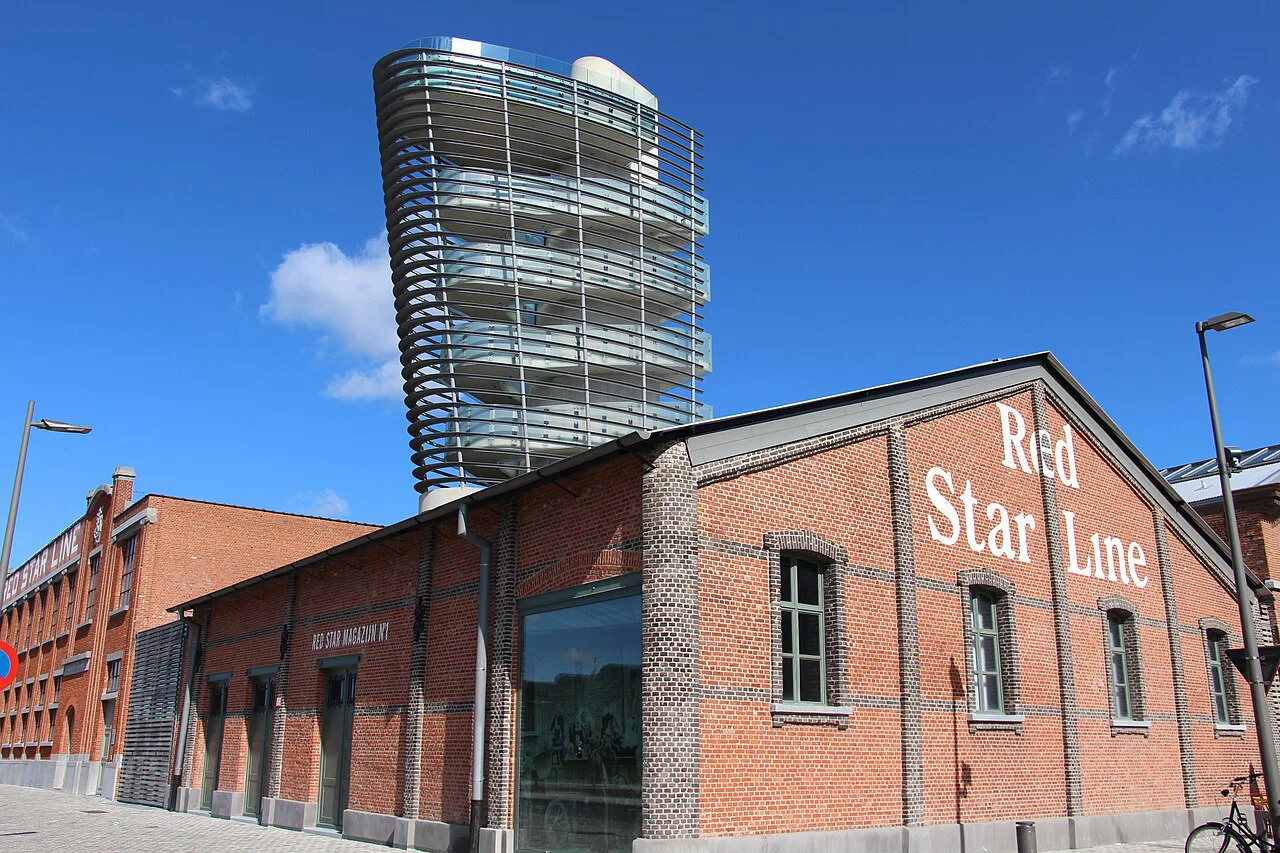
For a contrasting Antwerp museum, the MAS on the old docks covers the city's port and global trade in a very different building. If you want two museums in one day, the Red Star Line Museum traces emigration from the same waterfront and pairs well with a morning at Vrijdagmarkt.

Is the printing house worth half a day?
Yes, if you want one Antwerp sight that explains how the city made its money and its reputation, rather than another room of paintings. The presses, the surviving interiors and the ten spotlight books give a concrete story, and two to three hours is enough to take it in without rushing.
Build the visit around the museum's calendar, since the renovation window takes a large slice of the year out of play. Then pair it with the Grote Markt and a dockside museum for a full day in the old centre and along the river.
Frequently Asked Questions
Do you need to book Plantin-Moretus Museum tickets in advance?
Tickets are sold through the museum's own website, where the calendar shows availability for your date. Booking ahead is sensible on weekends and around the renovation works, when capacity may be reduced, but the site is the place to confirm the current rule rather than any third-party listing.
What is the Plantin-Moretus Museum best known for?
It is the preserved home and printing works of the Plantin-Moretus family, who printed here for nine generations, and it holds UNESCO World Heritage status. Visitors come for the historic presses, the original living rooms and the display of the firm's most influential books, including Ortelius's maps and Stevin's mathematical works.